Passover in Jerusalem

img_7337
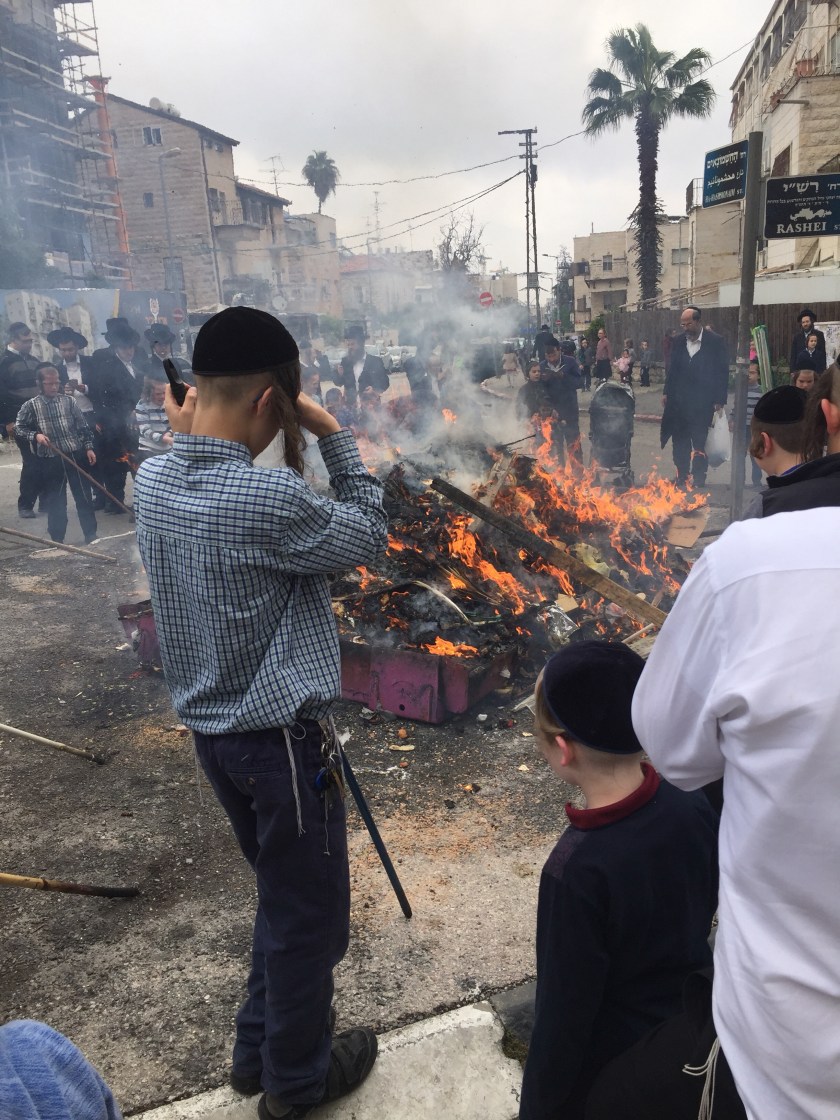
Burning my Chametz with a Haredi Jewish community in Jerusalem.


Yesterday we arrived in Jerusalem after spending a couple of nights recovering from Africa in Tel Aviv.  This is my third time in Jerusalem and Debbie’s first visit, but this visit carries a special significance.  Tonight is the first night of Passover, for our non-Jewish friends, this is a holiday that signifies the exodus of the Jewish people from slavery in Egypt during biblical times.  There is a custom on this holiday at the end of the seder (the large festive meal/ceremony), whereby Jews proclaim that the next year should be spent in Jerusalem; hence the significance of the visit.

More simplistically, Passover carries with it some very stringent dietary restrictions; one cannot eat anything that is leavened aka bread.  In Toronto, this means cooking at home for 8 days straight for us, which is always a mission.  As we were planning our trip we were trying to figure out where to spend Passover, and we figured Jerusalem made a lot of sense, as there a tons of restaurants here catering to this dietary restriction.  So much so, that as I searched for my typical last coffee and bagel this morning before the holiday begins, it was nowhere to be found!  I settled for a cappuccino and day old pastry I had saved.

On Passover, or Pesach as the members of the tribe call it, there’s another custom to burn all of your chametz (leavened products). I haven’t typically done this in the past in Toronto, but when in Jerusalem I figured I’d live as a local.  So this morning as I walked down the street from our Airbnb, I followed the scent of smoke, until I came across this large group of observant Jews burning their bread and thought I’d join them.  It was a very cool experience and I’m happy I took the walk.

To all of our Jewish friends, have a Chag Sameach.  To everyone else, have a Happy Easter or at least a great long weekend!

First Impressions of Africa

It’s Monday and I head out with George to do some shopping at a local supermarket to grab snacks for the upcoming week, while Debbie rests at the hotel.

George continues his overview of Tanzania from the previous night.  I am struck by one of the themes that quickly emerges.

IMG_0284

Having never set foot on African soil before, my opinions of the continent to-date have been formed by the numerous wildlife and cultural documentaries that I’ve watched, and the limited media exposure that we receive in Canada.  Even though I should know better, part of me was hoping to find the Africa of the early 20th century, with colourful dress and a myriad of vibrant cultures untouched by Western influence. But as I drive through Arusha and talk to George, what I find is a society that is rapidly modernizing and struggling to maintain its traditional cultures.

MPESA and a million other PESA (Swahili for money) companies that operate as de facto banks in the country dot the streets and represent the changing face of the country.  I ask George about how he’s seen the country change in his lifetime, and how this compares to the experience of his parents and grandparents. He tells me that up until the 80’s women didn’t wear trousers, but as TV became commonplace in the nation women began to demand their right to pants.  He also speaks of the cheap $10 feature phones and $40 smartphones flooding in from China, that caters to those with lower income in the country. Cleary, these changes are positive for most Tanzanians.

However, along with modernization comes the loss of age-old traditions.  George is clearly a modernist, and laments some of the traditional tribal practices that continue in the country.  Having grown up in a small village himself, he talks of many of the negative tribal practices that we’ve heard about in the west.  As he talks about the Massai, he provides a different view from the glorified portrayal I’ve seen in many movies. The society he speaks of, is highly patriarchal and polygamist, with forced marriages for girls as young as 10.  A society that in many ways is resistant to progress and still practices ineffective traditional medicine that result in many deaths per year. He seems uninterested in hanging on to most of Tanzania’s tribal traditions.

Another guide we meet, Saleh, has a different view.  He comes from a different tribe who are known as farmers, with vastly different traditions from the Massai.  His tribe is less patriarchal with each man taking only one wife. Saleh’s views on modernization more closely align with my own; the need to respect and keep the positive and important traditions within one’s culture while evolving those that are outdated.  Farming with his parents in the morning, and then acting as a tour guide in the evening so that he can one day open up an ecotourism business that will expose his tribe’s practices to tourists – he is a living example of achieving this balance.

This struggle between modernism and traditional beliefs and culture strikes a chord with me.  Obviously I want to see progress in my own society, and take advantage of all of the benefits that entails, but I am also saddened to think about living in a world that seems to be becoming more and more culturally homogeneous and westernized, when it is our differences that makes the world an interesting place to me.  If there’s anything I’ve taken away from Africa, its the strengthening of my desire to retain my family and cultural traditions while keeping up with the changes of the modern world. If I’m lucky, maybe the world will take a similar course.

Toronto to Arusha Tanzania


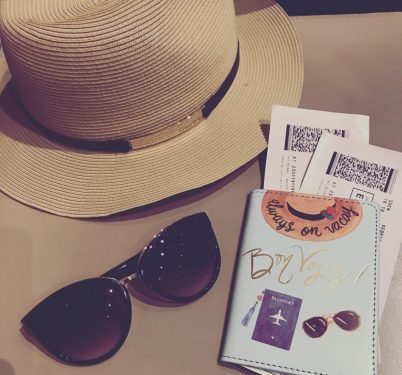
cropped-img_1990.jpgAfter more than a year of planning for our 4-month world trip it is finally time for us to grab our bags and head to the airport.  It all feels surreal; as if we are only leaving on a normal week-long beach vacation. Despite the planning we don’t really know what the next few months will entail.  Will it be a life-altering journey that takes us through three continents or will it just be an extended vacation that we cut short for one reason or another? With these thoughts in mind, we scramble out of the house and rush to the airport to catch our flight to Arusha via Istanbul.

The 10-hour, red-eye flight to Istanbul with Turkish airlines drags on as our neighbours on the flight yack away throughout the night.  An intoxicated and boisterous American woman, keeps asking the stewardess for more Turkish wine, while a retirement-aged Persian man debates the politics and culture  of the middle east with a young Egyptian. We are grateful for the small flight kit and earplugs provided by Turkish airlines.

The arrivals section of the Istanbul airport is dilapidated and looks a bit like Newark, but as we cross-over to the departures section, a modern terminal appears, replete with tons of great Turkish food options.  We sit down and have a quick bit of falafel and bunch of different salads before we board the flight to Tanzania.

When we arrive in Arusha, we are greeted by George, our friendly guide for the duration of our stay in Tanzania.  He drops us off at our hotel, the Zawati house, for some much-needed R&R before we begin our safari. We can’t wait!