A five-day detour in Bali

My introduction to Bali, was that terrible Julia Roberts movie, Eat Pray Love.  When I watched it, I kept feeling as if perhaps I was missing some deep underlying meaning that others saw.  Or maybe the book was better and I just joined the party too late.  Unfortunately, despite Bali’s charms,  I found some strong parallels to Eat Pray Love.

Maybe the old Bali with all of it’s charms has just been eroded by the millions of Aussie tourists, or perhaps with my short, five-day stay I missed some of its depth.  Most likely, it was both of those factors, combined with the fact that Debbie and I didn’t have much time to plan this trip because of our whole China Visa fiasco.  As a result, we ended up staying in Canggu in the southern part of Bali, which was jammed full of tourists and felt a bit like Ko Phi Phi/any other touristy Island in Thailand.  Nevertheless, Bali had some real magic to offer when we looked in the right places.

I’ve always been fascinated by Borneo, with its unexplored jungles, orangutans, beaches and just its general remoteness.  I was hoping that being part of the same country, Bali would offer some of the same treasures.  The south of Bali certainly does not, but I found that as we moved to the central part of the Island and away from the crowds, Bali is quite intriguing.

On our third day in Bali we hired a driver for $50 USD for 8 hours, and made our way towards the Unesco heritage-winning Jatiluwih rice paddies. As we drove North, the tourists and all signs of western influence, began to dissipate.  Each remote town featured its own gorgeous Hindu temple, and carved stone fences that earn it the reputation of being the island of 1000 temples.  As we drove through these small villages, it gave me the impression that this is likely how Bali used to feel throughout, and my disappointment was largely due to choosing the wrong part of the island to stay.

On our way back to Canguu, we stopped at the Monkey Forest and a famous temple.  Having a monkey jump on my back and grab at my water bottle was an experience I’ll never forget,  but it was a chance encounter at a roadside stop that will leave the most lasting impression.

We decided to stop to buy some fresh fruits at a local supermarket on the side of the road.  As we got out of the car, I spotted an opulent ceremony going on at the temple across the street.  There was an “orchestra” which consisted of a massive group of percussionists playing the most curious sounding sacred music and hundreds of locals carrying various offerings of food adorned in white clothes.  Inside the temple, there were people holding maroon felt-covered umbrella’s, and performing what looked like the Balinese equivalent of a Chinese lion dance.  Our driver explained that this was an annual celebration commemorating the creation of this particular temple.  It was the most magnificent and authentic experience I had during our whole trip in Bali.    Witnessing this completely foreign religious ceremony made me realize just how diverse and interesting the world still is.  In a world that sometimes, feels like it’s being watered down by a blur of fake news articles, instagram posts and buzzes on our smartphones, it’s comforting to know that there are still places where people have remained true to their past, while simultaneously embracing the modern.

The following day, we bought tickets to see a traditional Balinese dance and ceremony, but it paled in comparison to what we witnessed on the side of the road the day before.  We also stopped at this fantastic hole-in-the-wall vegetarian restaurant, where we ordered five dishes for the equivalent of $10 CAD, and discovered just how amazing Balinese food is.  After some rough days in Tanzania from eating contaminated food, we were a bit hesitant to eat at this roadside stop in Bali.  We opted to stick with freshly prepared hot foods this time though, and it all worked out fine.

I left Bali the same person as the one who entered. No Eat Pray Love transformation for me.  But I took with me a taste of a culture unlike all others that I’ve experienced, and a renewed appreciation for the diversity that exists in the world in spite of all the forces that are pushing us to be more similar than ever before.


The alternate reality of China

My heart was racing as we walked up to the immigration desk at the Beijing airport.  We still didn’t know if we would be accepted or rejected at the border as a result of Debbie’s birthplace, Taipei.  The airport was not what I expected in the capital of a burgeoning country that goes to great lengths to project strength and wealth to the outside world. It’s walls were bare, stores were few and far between, and it seemed like a bit of a relic of China’s past.  Was this really the Beijing that oversees the development of entire new cities throughout the rest of the country?

I didn’t know it yet, but this airport was reflective of one part of China, the part that is still left behind and not yet fully developed to the standards of a modern society.  The other part of China is the complete opposite – modern, developed and wealthy.  In some ways, more advanced than the west. Nevertheless, this environment didn’t ease my nerves at all, as I thought about what would transpire over the next thirty minutes.

After being bounced around a couple of times, we completed the paper work for our transit permit and it was quickly issued to us by the agent.  A wave of relief came over me as the agent returned our passports.  We proceeded to the border officer to finally enter China, and I was quickly let through.  All of a sudden the officer asked Debbie to step aside for a secondary check.  The manager on duty was called over and subsequently summoned the agent who issued Debbie’s permit.  There was a fair amount of discussion, and I could tell that Debbie was starting to grow uneasy; as was I.  Finally after producing some proof that she really did live in Canada the border guard kindly let her enter the country.  I was elated. After months of planning I was finally about to explore my top destination.

We proceeded to leave the airport and grab a taxi.  I went to the information booth at the airport to find the best transport to our hotel.  Now usually, the info booth at airports is simply there to assist travellers with impartial information, but in Beijing this desk serves as a front to sell overpriced private transfers to your hotel.  The clerk at the booth told me they would gladly arrange a car for 400 RMB.  The price seemed high so I decided to go check out a taxi.  At the taxi stand, the clerk manning the station offered us a ride for 200 RMB.  Luckily, Debbie caught onto this scam and realized the clerk was selling rides for some other taxi service, not the standard city taxis that were lined up in front of us.  So we walked past the clerk and up to a taxi in the line.  Debbie spoke Mandarin to the driver and established the ride would cost roughly 100 Yuan – a quarter of the original price I was quoted.  It was very fortunate that Debbie speaks mandarin, as most drivers in China don’t speak or read English.  (It’s critical to have any address you would like to visit in China written in Chinese characters.)

After a rather slow ride, Chinese drivers tend to follow the speed limit around Beijing as there are a plethora of traffic cams, we pulled into the Grand Hyatt Beijing.  Our driver nearly hit a woman who was getting into another taxi.  She was not pleased and asked the driver to move the car.  He began to shout back at the woman, and she became so angry that she slammed her taxi’s door into our taxi and then punched the window.  Our driver got out of the car and got into a full on screaming match with this lady.  Our bill for the taxi was 80 RMB but we quickly handed the driver 100 and walked away from the very awkward situation.  This was our introduction to China, but I kept an open mind.

Once we got settled in the room, Debbie decided to take a nap, but I was so excited I couldn’t sleep, so I decided to go for a stroll around the hotel, near Tiananmen Square.  The first thing that struck me was the lack of pedestrians, scooters and traffic that I expected to see in the core of a 20 million person city.  There were some pedestrians and cars, but far fewer than Taipei, Bali and the other Asian countries I’ve visited.  I never got a clear explanation for this phenomenon.  The Chinese government has capped the population in Beijing in an effort to control overcrowding and has since relocated some of the residents of Beijing, so perhaps this was a factor.  Others told me it could have been our proximity to the main government offices that discouraged locals from congregating in this area.  Perhaps it was even the time of day, I’m not sure.  It was certainly the quietest major city core I’ve visited at 2:00 in the afternoon.

The next thing that struck me was the heavy police and security presence around the city.  There are numerous small police stations dotting the core of Beijing – many of these stations are housed in a police bus that is semi-permanently parked in the location or is completely mobile.  The positive of this heavy security presence is that I certainly felt very safe in Beijing, to the point that I was quite comfortable walking around at night alone.

The influence of the government in China was evident everywhere I visited.  I noticed there were quite a few people sweeping the streets with old-style brooms, and wearing a uniform that appeared to indicate that they worked for the state.  It struck me as a way that the state provides employment to some of its citizens who perhaps are underemployed, though I can’t be certain.

The following day, we took an organized tour to see Tiananmen Square, The Forbidden City, and the Great Wall of China at the Mutianyu entrance.  Our guide was a nice woman about the same age as us who spoke almost perfect English.  The first stop was Tiananmen Square which is absolutely massive, especially considering its location in the heart of Beijing.  As our guide described Tiananmen she made brief mention of the student protest that took place.  To paraphrase “there was a student protest here years ago, that you may have heard about. Since that time, the government has increased its security presence in the area so there will be no more protests.”  I think she may have been burying the lead there a bit, but compared to the first time Debbie visited China about 10 years ago this is actually progress – at that time there was no mention of a student protest and even tourists were told not to discuss it.

Next up was the Forbidden City.  Once again the scale of the area was striking, with countless wooden buildings, painted in vibrant blues, greens, golds and reds.  Historically this is where the emperor of China resided with his harem of concubines and eunuchs; no other men were allowed inside of the palace.  The palace itself was impressive, but I found that I really had to stand there and try to imagine how this scene would have looked two hundred years ago to free my mind from the few hundred thousand tourists that visit the site daily and surrounded us as we walked around.

After a two-hour drive, our next stop was the Great Wall of China.  We took the cable car up to the wall as we enjoyed the lush mountains around us.  When we arrived our tour guide gave us a quick history lesson highlighting the fact that the Great Wall’s construction actually began thousands of years ago in piecemeal as different regions built their own segments of the wall to fend off nomadic tribes and the Mongols.  It wasn’t until the Ming dynasty that the segments of Wall were joined into what is now known as the Great Wall.  What impressed me the most about the Great Wall, was the fact that you can actually hike along it for 5KM-10KM at a time, as it winds through the rugged mountain terrain.  Hiking the wall really gave me a better sense of its size.  It was hard to wrap my mind around how it was possible to construct a wall that is probably fifteen or twenty feet wide, a couple of stories tall, and thousands of kilometres long.  All of this made more difficult by the fact that it was constructed hundreds and thousands of years ago.  As I hiked a few kilometres and probably passed millions of bricks, I gained a true understanding of why the Great Wall is considered one of the wonders of the world.

After this long day of exploring, I decided to take a leisurely bike ride through Beijing the next day and explore some of the famous Hutongs (alleyways).  Biking around Beijing was an amazing way to explore the city.  It has great bike lanes on almost every major road in the core.  The Hutongs of Beijing really highlight the change that has taken place in China over the past couple decades.  They are remnants of the city’s past; grey, sometimes dingy, and dotted with retirees, children and shop keepers sitting outside on plastic chairs or going about their daily business.  Some Hutongs have shops and vendors, but many others are splendid in their simplicity. They are a far cry from the steel and glass skyscrapers that are mere blocks away.

On our way home to Canada a couple of weeks later, we spent the last day of our trip in Guangzhou.  As we pulled up to our hotel, it was clear that this was the modern China, with its sparkling buildings, new roads, western fashion brands and a wealthy class of Chinese enjoying the amenities of their city.  The people of Guangzhou certainly seemed to be a different crowd than those who I saw in Beijing.  They were younger and seemed to have some money to spend.  The city has a massive park cutting through the middle of the core, the world’s 6th tallest building and a free museum displaying China’s rich culture through its ancient pottery, wood carvings, art and numerous other exhibits.

I left China seated next to an economics professor from a university in Beijing who was doing a post-doc in Canada.  One of his primary areas of focus, is studying equality/inequality in China.  After witnessing the stark contrast between China’s working class and wealthy as well as it’s underdeveloped and hyper-developed areas I thought this was a fitting end to my trip.  I had the chance to hear an academic view on the same themes that I had just witnessed first hand.  As we passed the fifteen hour flight talking away, I realized that I was leaving China, more fascinated with it then when I had arrived.  I also had the strange sensation of being repelled and drawn back to the country simultaneously. Despite my discomfort with some of the policies of the government; the culture, people and the alternate reality that China presents are too hard to resist.  I only hope I’ll have the chance to return.

Sweating in Hong Kong – literally and figuratively

I’ve had a fascination with China for as long as I can remember.  I have spent countless hours learning about this country – reading articles, watching documentaries and taking an introductory Mandarin class.  Until now though, my views on China were entirely academic and certainly biased; they were formed entirely through hearing the opinions of others.  I had never set foot in the country. So as we planned our trip, China was #1 on my list of places to visit. I’ve now scratched the surface, and my curiosity has only grown.

For a country of this size, population and regional diversity, I’m sure it would take years to truly get a good understanding of the cultures and ways of life in China.  In total we only spent about 8 days there, so my opinions below are really an unvarnished first impression.

Our introduction to China had a tumultuous start.  Before we left Canada, we were busy getting organized and applying for our Tanzania VISA, and ran short on time to apply for our China VISA .  I did some online reading and found out that many Canadians take a short trip to Hong Kong, and apply for a VISA in 24-48 hours – so no worries, we’d get our VISA in Hong Kong.  

Skip forward a couple months and we landed in Hong Kong, with the intention of staying for three days to secure our VISA to mainland China before moving on to a 10-day trip starting in Guilin and then taking a train North to Beijing.  We walked over to the little VISA booth in the Hong Kong airport, and were shocked to hear that due to the fact that Debbie was born in Taiwan, this could cause some challenges with securing our VISA to China.

For most Canadians, getting a mainland China VISA in Hong Kong, is a smart and convenient way to go about it, but if you were born in Taiwan, beware!  Debbie was travelling on her Canadian passport, so we assumed she would be treated like any other Canadian, but due to the current political situation between China and Taiwan, and China’s “One China Policy”, she was subject to some “special” restrictions.  The end result was that our Chinese VISA was rejected in Hong Kong. In fairness to China, they do clearly state the policy that those born in Taiwan need to apply for VISA’s in their home country, so it was our error, but nonetheless it was beyond frustrating.

After a few minutes of losing my shit, we quickly began to replan our trip and cancelled our train tickets and hotels. I  discovered, that Beijing (and numerous other cities in China) have a 144-hour VISA free transit exemption, whereby you can visit the city without a VISA if you are continuing onward to another country i.e. doing an extended layover in the city between flights.  There was still the chance though, that we could be rejected upon arrival in Beijing, but my desire to see China was so strong, that we decided to gamble and go for it. Getting rejected in Beijing would mean losing more than a thousand dollars, so we were pretty freaked out about the possibility, but we didn’t have a lot of options.

We already had a flight out of Beijing to Japan booked, so we needed to kill a few days before heading to Beijing. Since Bali was on Debbie’s bucket list, we decided to make the best of a bad situation, and booked a last minute trip there (literally booked a flight for the next day).

Before leaving for our impromptu Bali trip, we spent the next day and a half in Hong Kong., sweating like pigs.  Hong Kong is an interesting place, but it has the most disgusting, hot and humid weather that I have ever encountered.  We stayed in Mongkok, and spent the majority of our time on the Kowloon side of Hong Kong. Hong Kong is definitely the most intensely crowded and fast-paced place that I have visited, far more intense than New York.  The combination of the crowds, the sweat, the bright lights and the smells of street food definitely give Hong Kong a unique vibe.

With our limited time we had to be selective about what we saw.   The first day we slept, toured Mongkok and one of the massive malls in Kowloon. The next day, we grabbed the best tasting and most authentic Kosher Chinese food I’ve ever tasted, and then took in the view of the Hong Kong skyline. Our last day we visited the ladies market, and bought lots of cheap souvenirs for our friends before heading to the airport to catch our flight.

Hong Kong is definitely a neat place to visit, but three days felt like just about enough time to see the highlights.  If I were planning a Hong Kong visit again I would say that 4 days is about the right amount of time.

I’ll cover the rest of our China visit to Beijing and Guangzhou in an upcoming post – stay tuned!

Stop in the UK to cut your Europe-Asia flight costs down by 50%

The way that airlines determine flight prices is a mystery never to be understood by man.  Why was it $1000 cheaper for us to backtrack from Greece to the UK prior to heading to Taiwan?  Most likely this is due to London being a major transit hub. This part is somewhat logical, but if we were to purchase these same tickets, routing through London, via expedia.ca as Canadians it would also be $1000 more expensive than purchasing the ticket through the UK expedia, and this part confounds me

To make matters worse, a phone call to a major travel agency was met with the response that they cannot assist us with the purchase of a “UK-based” ticket, because they are a Canadian travel agency.  When I told them, I can simply go to the UK Expedia and purchase it myself I was told that they cannot help, and that I should go ahead and use Expedia.

Confused yet?  Thank goodness for Google Flights and its ability to cut through the airline games to secure us the best price on our tickets. (No this was not sponsored by Google, our blog isn’t that important.)  From our experience booking flights for this trip, Google flights, combined with diligence, is the single best way to save substantial amounts of money on your flights. Using expedia or other travel agency sites will not suffice, as Google aggregates their results across different countries’ travel sites as well as fares advertised directly by airlines.  

Great Google Flights Features

  • “Explore Map” lets you explore the cost of travel to various destinations from your current location
  • Tracked Prices – We used this religiously to monitor various flight combinations prior to booking

Missing Features

  • When you’re flying all over the world, planning multi-city flights and looking for the cheapest options, a “reverse explore” feature would be handy.  By this, I mean the ability to enter in your destination and explore all the flight prices from various starting locations. I did this manually myself, and if you’re planning a multi-city journey, you will likely need to do this too.
    • Let’s consider the Asia portion of our trip.  We wanted to visit Taipei, Hong Kong, Tokyo and Beijing, but didn’t have a strong preference in terms of order.  We quickly realize that Beijing is the most expensive leg of the journey, so the question is – should we fly from Taipei → Beijing, Tokyo → Beijing, Hong Kong → Beijing.  When you add different flight date options, this can become a lengthy search. For now, I haven’t found a better tool than Google flights, and some elbow grease.
  • Another useful feature would be the ability to add multiple destinations without a defined order or travel dates, and then be provided with the lowest cost options
  • Price Predictions – Some other travel sites offer this.  Based on historical data, an estimate as to whether the flight price will increase/decrease and how quickly.

TLDR

So if you want to save 50% or more on your flights to Asia from Europe, you should look at routing through London, and leverage Google Flights to find the best options.

The one perk, is that you can extend your stay in London for a few days and give the city a quick tour like we did.  Debbie and I had fun eating our way through London, but I won’t go into detail, as I don’t think we covered any particularly unique sites during this leg.  Some comments in the pics about where we visited.


Emporio – The real jewel of Santorini

As I sat imagining Santorini, I thought of azure waters, ancient alleyways, delicious tzatziki on warm pitas, the sound of waves splashing against old wooden fishing boats and the charm of those imperfect alleys and walkways carving up the island.  As soon as those thoughts would enter my mind, I quickly pushed them aside and assured myself that this tourist-ridden island would surely be a let down, overrun by crowds and absent of all the old world culture I sought. I also wasn’t convinced that Santorini would be unique relative to the other Mediterranean destinations we had just visited.  Despite my reservations, Debbie was insistent that we make a stop in Thira (as Santorini is known by Greeks), so I reluctantly agreed.

There are those times while you’re travelling, when the stars align, you stumble on a gem and all of your expectations are blown away.  For me, this happened in Santorini. As I expected, parts of Santorini were filled with throngs of tourists and had streets lined with souvenir shops, but if you steer clear of the towns of Oia and Thera, you can certainly avoid this. By sheer luck, and our limited budget, we decided to book an Airbnb in a quiet little village called Emporio.  Emporio lacks the quintessential caldera view that you see in photos when you Google Santorini, but it certainly makes up for this in old world charm. Emporio is characterized by peace and quiet, with only a handful of tourists walking through town every day, gorgeous views of the ocean and church steeples, and alleyways – oh the alleyways!  Every nook and cranny of Emporio is worth exploring; in one alley you’ll find rustic blue painted doors, the next has a staircase of bougainvilleas and the next features whitewashed walls that cast shadows from that ever present mediterranean sun. At night, we could relax in our jacuzzi overlooking the ocean, to the sounds of traditional greek music coming from a nearby villa, and the chatter of families enjoying a barbecue.  In the neighbourhood, local restaurants and grocery stores serve up delicious fare at reasonable prices, and Perissa beach is a quick scooter or ATV ride away.

Our journey to Santorini didn’t start out so smooth though.  It began with the worst flight of our trip, operated by Vueling Airline and an unintentional 6 hours in the Athens airport lounge waiting for our next flight.  Due to incompetence on the part of the airline, we missed the better part of a day in Santorini, and Vueling was beyond difficult to deal with to rectify the situation.  For future trips, I’ll definitely avoid flying with Vueling. Once we arrived in Santorini though, the trip turned around.

The host of our Airbnb , Anastasia, was delightful, and spent a good half hour telling us about the best sights to see – namely wineries, the other villages on the island, beaches, and for those who are inclined, boat tours.  Over the five days we spent in Santorini we did all of the above with the exception of boat tours. Our host also set us up with an ATV rental to get around the Island, which I would definitely recommend to other travellers.  Our Airbnb came with a private jacuzzi and patio area on the roof, and unexpectedly even had a cleaner who would come by in the morning to tidy up and bring fresh towels. This was definitely one of the most luxurious Airbnb’s we visited during our trip.

Most of our trip was spent visiting other towns such as Oia, Thera, beaches such as Perissa and Red Beach, Sigalas Winery, and generally just relaxing, drinking and eating in our villa.  One afternoon, as we were hopping off our ATV to head to a restaurant, Debbie spotted a familiar face in the distance – Kimon, our wedding photographer who shot our big day in Toronto a couple years ago.  From his instagram, we had a feeling Kimon may have been in Greece, but hadn’t given it much thought until this chance encounter. He was too far in the distance to say hi, so we sent him a message on Instagram to find out if we actually just saw him walking the streets of Santorini.

Kimon got back to us, and we invited him over for some drinks to catch up.  Our chance encounter with him was the highlight of the trip. When you’ve been travelling for a couple months, it feels great to spend time with someone from home.  We had a blast, eating the smorgasbord that was left in our fridge, and enjoying some Greek beer and wine before we flew out. Kimon even decided to bring his camera along, and take some shots in Emporio with us.  I’ll label his photos vs. ours, but I’m sure you’ll be able to see the difference. He is an absolutely amazing photographer – so if you are visiting Santorini and are looking for a photoshoot, send him a message.

Santorini was one of the most memorable stops of our trip, and truly feels like paradise.  If you’re considering a trip there, it has my vote, but do yourself a favour and stay in the real jewel of the island – Emporio.

Kimon’s Shots

Our Pic’s

Exploring another world, right here on Earth

4325647168_img_1243

I first fell into travelust with Iceland when I started looking at destinations for my bachelor party a few years ago.  The idea of renting a campervan, and setting out on the open road to discover mountains, waterfalls, glaciers, hot springs and everything else that Iceland has to offer was beyond intriguing.  Though, it wasn’t a practical trip in the end for my bachelor party, I kept it on my radar, and when Debbie and I put together our wish list of countries to visit, Iceland quickly rose to the top for me.  Debbie was not as keen, to leave the snowy and rainy winter in Canada for crappy weather in another destination, so we agreed we would slot it in on the way back home if time permitted.

So it was a bit unexpected, that as we sat in Tel Aviv planning out our next few countries that we decided to visit Iceland in May (yes this blog post is a bit late).  Just by the nature of the timing of our trip, we visited Africa, Israel and Italy during the shoulder season for tourism – not the busy season, not the off season, but that month or two between.  Everywhere we went, all of the locals commented that we picked the perfect time to visit; a time with nice weather sans the massive crowds. So we decided to continue the streak and visit Iceland in May rather than July as originally planned, which would have coincided with the peak season.  Visiting Iceland in May, meant we were able to easily find last minute accomodations, enjoy empty roads and save a bit of money.

We also decided, that since neither of us knew how to drive a standard vehicle, which ruled out most of the best motorhomes, that we would rent a small economy car and stay at Airbnb’s along the way instead.  This actually proved to be a more economical way to travel Iceland. Renting a motorhome in Iceland is very expensive, around $300 CAD per day, and fuel prices are insane. To fill the tank of our very small economy car, was around $100 CAD, so I can’t imagine the heart attack you’d have at the pump filling up a motorhome.

Creating an itinerary for Iceland took some time, because there is a lot to see, and there’s no way to cram it all in a week.  Originally, I wanted to drive the entire ring road, but after getting some great advice from our friends Paul and Sam who had done a similar trip, we shortened the journey to the southern half of Iceland from Snæfellsnes peninsula in the west to Reynivellir in the East.  This proved to be more than enough driving for a week and covered many of the best sights in the country. Other travellers who drove the full ring road, told us that the Northern half ot the country is not quite as exciting. If you’re interested in visiting Iceland, we relied heavily on this amazing blog for ideas and suggestions.

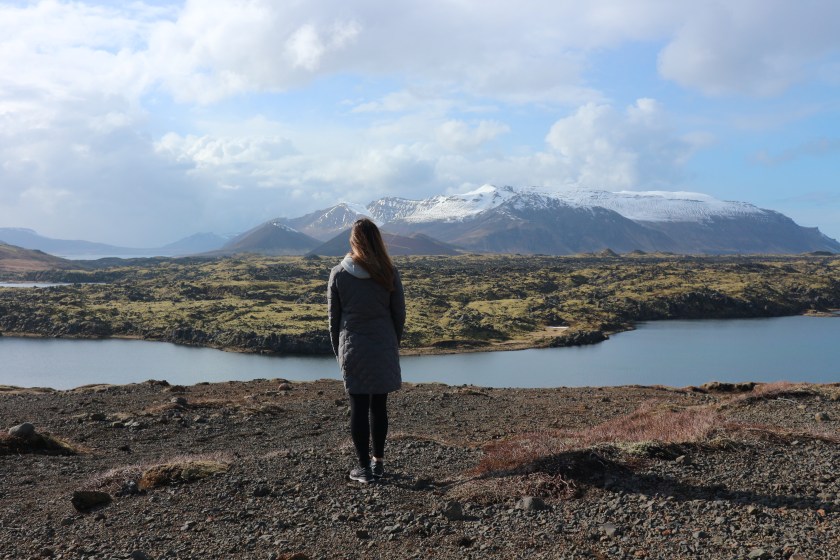
In terms of our experience, it’s difficult to put into words how amazing this tiny country is.  I saw more mountains and waterfalls in seven days driving through Iceland, than I’ve probably seen in the rest of my life.  Every turn of the two lane ring road, revealed a new treasure more magnificent than the last. And unlike other countries, where all the most impressive sites can be found on a top 10 list on tripadvisor, in Iceland, some of the greatest sites we saw were just random waterfalls, craters, mountains or animals that we happened upon driving along the highway.  When we saw something we liked, we’d just pull the car over and go exploring, which happens to be my favourite pastime. We climbed through a field to get up close with a waterfall, took pictures in a moss-covered lava field, and army crawled up to a herd of reindeer outside of our Airbnb. We stayed on a farm where we held a two-day old baby lamb and fed Icelandic horses, spent the night in a remote cabin with ocean in front of us and mountains behind us, and spent two nights in a trailer beneath a waterfall and a mere 10 minute drive from a massive glacier.  We drove through the craziest weather that went from sunshine, to snow, to rain, to hail, back to sunshine only to repeat the cycle three more times during the day. And we cooked a lot – it’s true what they say, eating out in Iceland is very expensive.

All in all, this was one of the top countries that we’ve been to on our trip.  Even Debbie ranks it as one of her favourite places, despite her lack of enthusiasm at the start.  Though I said Iceland can’t be summarized in a top 10 list, here are 10 of my favourite things about the country.

10. Picture perfect sites, that can’t be captured on camera

9. The waterfalls

8. The gravel road mountain pass on Snæfellsnes peninsula where I thought we may go over the edge

7. Feeling like you’ve left earth and visited another world

6. The remoteness

5. The technicolour moss

4. 16 hours of sunlight to go exploring

3. The freshest drinking water you’ve ever tasted

2. The cleanliness of the society…especially the washrooms

1  The little scrubbing brushes that Icelanders use to clean their dishes instead of sponges…genius!

Searching for happiness in Barcelona

I’m sitting on a bus riding through Barcelona on the way to Guell park, as Debbie and her friend Min, who we just met up with, are catching up.  Seeing a friend in-person for the first time in 6 weeks, feels wonderful, and has made me reflect a bit on relationships, happiness and life.

We set out on this trip, in order to live a life of no regrets. We wanted to make sure that we saw the places that interest us and have experiences that may be more challenging to have later in our life. That was our primary goal. But in the back of my mind, there was always an inkling that even though I’m quite satisfied with life and work, travelling the world would bring me even more happiness.

When you’re in the office, people often talk about looking forward to retirement, and dream of what it would feel like to be totally free to set your own schedule.  No commitments. We’ve all had those conversations about what we would do if we won the lottery. My answer was always travel the world for a bit and then work on meaningful projects, regardless of what those are. I also had the misconception that I’d be even happier doing this than the normal 9-5.

Now that we’ve been on the road for over a month and settled into our travel routine I’ve now busted this mental myth that I had. Don’t get me wrong, travelling is amazing. I’m grateful every day for this trip, and feel fortunate I’ve had the chance to do this. I’m happy every day we are on the road, but I’m not actually substantially happier than I was while working in a job that I cared about. Less stressed, definitely; happier, no.  This situation may be different if I was in a job I disliked, or had other life circumstances in my way, but in my current situation, happiness is pretty consistent.

I often read books that talk about the fact that happiness comes from within, and that it’s a state of mind more so than something that can be attained by achieving a milestone.  I’ve always believed in this notion, but sometimes lose sight of it when I’m caught up in the hustle of working, life and Toronto. Over the past month and a half of travelling I’ve come to experience this truth.

There’s a TED talk, about a Harvard study that was done on happiness, and that the most significant factor is having close relationships with a few people.  Being a bit isolated on the road has also highlighted this for Debbie and I.  We miss our friends and family back home, and are always skyping and facetiming them to try to share our travel experiences with them.  I’m growing to appreciate these relationships more, and can’t wait to see everyone when we’re back home.

So in a few months when I’m back at the office, dreaming about some far off beach, hopefully this blog post will remind me to smell the coffee and enjoy life in the present.  The beach can wait, at least for a few months.

Spain pictures below.


When in Rome, third time’s a charm

Come on in and enjoy some of our delicious “authentic” Italian food the greeter said. The menu looked fine, and as newbie travellers we ignored many of the warning signs of a major tourist trap. What proceeded was the worst Italian meal I’ve probably ever had (much worse than East Side Mario’s) complete with soggy pasta and some ball that was overpowered by the taste of anchovies. This was ten years ago, my first time visiting Italy, and as I set out to plan my third trip there, I was determined to avoid the tourist traps and mistakes I made on the first two trips.

Before our big adventure Debbie had never been to Italy, nor had my parents, and since we wanted to meet them somewhere in Europe, Italy seemed like a good choice. This time around though, I was determined to try to seek out those coveted authentic local experiences that many travellers are looking for. By this I mean those rare moments on a trip where a local gives you a true taste of their culture, or you find a hidden gem of a restaurant where you’re the only foreigner, or you stumble across a site that’s “off the beaten path”. Or perhaps even more important, just avoiding the giant lineups and overpriced attractions as much as possible. Don’t get me wrong, I am a tourist, not an elitist snob, and will gladly hit up many of the tourist spots as well, but I’ve found that if I only see those tourist destinations on a trip it feels like I’ve missed out on the real culture of the destination, and my memories are a series of postcard photos rather than memorable experiences.

So with that in mind, as we planned out our Italy itinerary we made a number of changes from my past trips. In Rome, we stayed in the Trastevere neighbourhood, which img_7834is just across the Tiber river, and walking distance to the core of the city. Unlike the heart of Rome where I stayed in past trips, Trastevere has more locals than tourists, restaurants where you can find great food at a decent price, and the chance to see the daily life of ordinary Romans. Most of the restaurants we tried in Trastevere were better than in the core; our favourite – a small take out shop called Suppli serving delicious pizza and pasta for 5 Euros a meal. Dinner in the neighbourhood at Grazia & Graziella was notable for its delicious roasted vegetable salads and the free prosecco we got for waiting in line for 10 minutes; Toronto restaurants take heed.
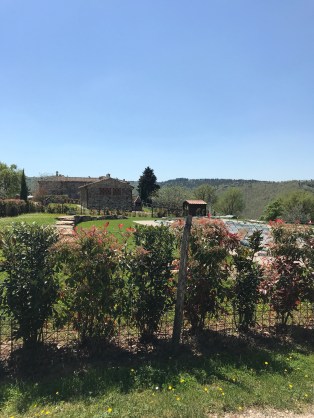
 

img_7828Next on the itinerary was Tuscany. My past two trips to Tuscany centred on Florence, so again we mixed it up this time. We picked up a rental car in Rome and made the drive to our new base in Tuscany, a converted farm house with views of vineyards and olive groves, just outside of a town called Badia A Passigano (half way between Florence and Siena). On the way we stopped in a sleepy town called Orvieto that had a remarkable duomo, which in my opinion rivals “The Duomo” in Florence. Over the next few days we took day trips throughout Tuscany with my parents, often getting late starts intentionally, or sometimes unintentionally, after enjoying breakfast on our patio. Quick summary of our day trips below:
Siena – Over rated in Debbie and my opinion.  Has a more local feel than Florence but nothing very notable that cannot be found elsewhere. I know others disagree.

San Gimignano – Beautiful UNESCO world heritage site town, with large towers throughout. Shout out to Paul for the recommendation

Florence – No explanation required.

Cinque Terre – it’s as good as people say, but probably requires two days, or a full 12 hour day to explore all five towns. We made it to three but didn’t arrive there until 1:00.

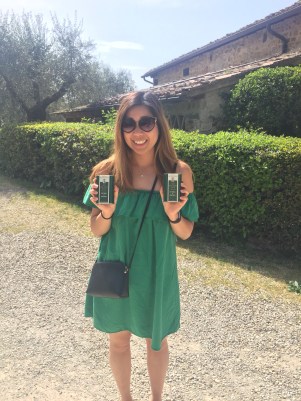
In addition to ordinary sites, we did have two “real” experiences. On our last day in Tuscany we booked an Olive Oil tasting at a grove that was owned by the Machiavelliimg_7611 family a few hundred years ago. As most authentic experiences go, I had no idea this Olive Oil tasting tour would turn out to be amazing. When I found the estate, Fattoria di Bagnolo di Marco Bartolini Baldelli, a man answered the phone and agreed to give us a tasting two hours later, so I expected this would be one of those spots where buses of tourists arrive, constantly get churned through olive oil tasting like cattle, buy their bottle and leave. When we pulled up to the estate though, we were the only car in the lot and were greeted by the owner Marco. Marco gave us a private tour of the estate that had been in his family for generations. The newest building on the property was constructed in the 18th century, and many of the historical relics such as old wine cellars and olive oil machinery were well-preserved. Marco could speak to you about olive oil for hours – it’s production, the history of the craft, it’s linkage to Italian culture, the varieties, how to taste it, how to distinguish pure virgin olive oil from the junk in supermarket shelves and so on. It was this passion, that gave us a peek into Marco’s world and made this experience so memorable.

The second experience we had, was a pasta-making class in a Florence restaurant, that we signed up for through Airbnb experiences. Granted this experience was organized img_7829and paid for, so it was by no means spontaneous, but once again we had a passionate master craftsman, teach us the in’s and outs of tagliatelle, ravioli, al dente, and the different ways to make dough. Making pasta with an expert guiding you is surprisingly easy, so much so, that Debbie and I are definitely making homemade Pasta when we get home. After we made the noodles, the restaurant cooked them for us and added different sauces to make an enjoyable meal.  This was by far our best experience in Italy because we actually did something and learned something useful.


All said and done, this visit to Italy had a distinctly different feel than my earlier trips; definitely more local, definitely more authentic feeling.  So as we plan the rest of our trip we’ll continue to stay in local neighbourhoods rather than the tourist hubs, seek out authentic experiences with locals, and embrace our wanderlust.

Our eating tour of Israel

I’m a bit behind on our blog posts, so this one is coming to you a few weeks behind.  As I write this, I’m sitting in a remote cabin in Iceland, looking out at the ocean and mountains, as the wind howls and flurries of snow come and go.  But more on that later.

If you’ve been following the news lately, you’ve probably heard mention of the issues going on along the Gaza strip.  It’s an unfortunate situation, and I’m sympathetic for all those who have been affected.  The juxtaposition of our “eating tour” through Israel, while that situation was happening is not lost on me.  That said, I think it’s important to highlight the fact that life in Israel during times of conflict continues as normally as it can (I can’t comment on Gaza as we didn’t visit there).  Like all places, if you form your view of a country based solely on what you read in the news it will be distorted towards the sensational, rather than the experience of an average tourist.  So I hope this post gives a view of what it’s like to visit Israel for those who haven’t been, and some good food spots for those who may be going soon.

As a somewhat observant Jew, I only eat Kosher meat.  In Toronto this can be limiting at times, but in Israel an entire world of exciting new possibilities opens up (so if you’re wondering how someone can be excited about eating Burger King, this is the reason).

Israel is a country of immigrants.  Each group that has made Aliyah to the country has brought with them the culinary traditions of their home country.  This includes cuisine from Morocco, Eastern Europe, Iraq, Tunisia, Ethiopia, Yemen, North America, Italy, France, the list goes on.  As a result, some claim that Israeli food is really a mashup of the flavours of other countries.  I think that’s probably true, but there are some dishes that Israel has become known for like falafel, shwarma, sabich, fruit shakes among others.  There’s a reason that they are known for these dishes, they nail it.  As we tasted their take on Asian cuisine the results were more mixed, but still enjoyable.

Part of what makes the food in Israel so delicious, is the fresh local ingredients that are available.  The produce in Israel, is much better than what we get in Canada, because it doesn’t have to be shipped in from far away.  When you eat an Israeli salad in Canada (cucumber, tomato and parsely) it is never the same, because the cucumber lacks the flavourful sweet taste that an Israeli cucumber has.  I’m now sold on the buy local food movement.

Debbie and I also had the pleasure of celebrating Passover in Israel this year.  In Canada, that generally means a week of mediocre food, craving bread and pastries and the overall feeling that you’re on the Atkin’s diet without the weight loss because of all the candy and chips you shove in your mouth to compensate.  Passover in Israel is about as far away from this experience as it is from Iceland.  We ate out at restaurants almost every day, as I frequently questioned how it was possible that this was Passover food.  We ate fish and chips, McDonald’s chicken nuggets, shwarma, waffles, and sandwiches on a bun (yes a Passover bun – not quite what they ate during the exodus but hey, when in Jerusalem!)

After Passover, our indulgence continued, and a serious chunk of our trip was spent eating, watching Netflix and getting late starts in the morning.  Debbie is a big foodie so this is her idea of a great trip, I can’t lie, I enjoyed it too.

We did some non-eating activities too – Dead Sea, Masada, Yad Vashem, Mount Hertzl etc., I’ve sprinkled some of those pictures in the album too.  We also had the chance to meet up with my cousin Beca, who lives in Jerusalem and go for some Tunisian food and craft beer afterwards – great to see you Beca! All in all, it was great to live a bit like locals in Israel, and have a chance to relax after our intense trip to Africa.

A few food highlights for those planning a visit:

Tel Aviv

  1. Hakosem – Amazing falafel and shwarma, best we ate.  Shout out to Debbie’s friend Andrew for the recco.
  2. Ca Phe Hanoi – Israeli take on Vietnamese.  My first Pho, and Banh Mi. Wow, I’ve been missing out.
  3. Burger King – My first whopper, epic.
  4. Memphis Burger – Better quality than Burger King, but somehow not as exciting for me.
  5. Bucke Cafe – Great breakfast, decent Shakshukah.
  6. Fish and Chips place in Carmel Market

Jerusalem

  1. Dan Jerusalem Hotel – 8 course meal fot the Passover seder was probably the best meal I’ve ever had, and the buffet in the morning.  Stay at the Dan for Passover just to eat,
  2. Coffizz – Decent cappucino for five shekels, pastries for the same.
  3. Aroma – Same as #2 if you want better quality and are willing to pay more.
  4. Juice/Shake bars – Pomegrante – unreal.  Also tried the shakes with dates and pecans, also good.


Photos from Tanzania

It’s been a couple of weeks since we left Tanzania, and we’ve finally got our pictures in order.

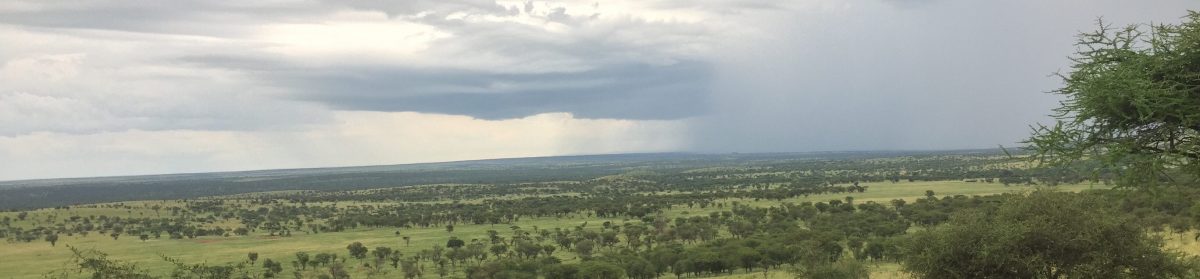
As we planned our trip to Africa, we were looking at a number of different countries as options – South Africa, Botswana and Tanzania.  Though we haven’t visited the other countries on that list, we’re really happy with our choice.  The great plains of Tanzania were just as spectacular as we ever could have imagined.  We also decided to visit in mid-March, which many travel blogs/tour companies will have you believe is a bad time to visit due to it being the start of the rainy season.  Maybe we got lucky, but after experiencing the country in the rainy season I would definitely recommend that others see it at this time.  There was minimal rain, it was almost all sun all the time with only a couple of showers during our visit.  Most of the tourists had left the country, so we were the only guests at many of the hotels we visited.  As you’ll see below, despite claims that it’s hard to spot animals in rainy season, they were everywhere, and easily visible.  We also got to experience a green savannah rather than the normal dusty brown.

We visited three parks during our Safari.  The trip began in Tarangire park, where we saw a ton of elephants – they are not shy and walk right up to the vehicle.  Next we went to Ngorongoro crater, followed by Ndutu in Nogorongoro park, and finally made our way to the Serengeti.  The ability to go off-road in Ngorongoro park and get up close with all of the animals, and the fact that the wildebeest migration was taking place in Ndutu at this time made it the most enjoyable portion.  When I pictured a safari in my mind before experiencing it, I thought you would have to drive for 10 minutes before spotting an animal in the distance. In reality, in Ndutu, we saw animals up close at every turn and even caught a cheetah hunting a young wildebeest.

We need to give a big shout out to the tour company we booked our trip with – Amani Afrika.  They are a small local tour company run by a husband and wife team, and their personal touch and professionalism could be felt throughout the trip.  We also need to thank and recognize our tour guide George.  George was an absolute professional; hearing him speak about the animals was like watching a planet earth documentary and his ability to spot animals in the distance was unbelievable.  If you’re thinking about booking a safari, a great guide is what will make or break your trip, so make sure you get a good one.